(日本語ブログ:生成AIを使い英文IRディスクロージャー業務を行う際のAIとの正しい付き合い方とは?|One World Link)
As an IR or ESG professional in Japan, you already know how demanding your job is. Between preparing disclosures, responding to investors, and managing internal reports, translation often feels like just one more burden—one you barely have time for. AI tools like ChatGPT promise to make the process faster and easier, but can they really deliver the accuracy and nuance your communications require?
AI translation has come a long way, offering instant results that seem like a perfect solution for time-strapped professionals. But as useful as these tools can be, they also have limitations—especially when it comes to financial, regulatory, and investor-facing content. Knowing when to rely on AI and when to steer clear can make the difference between clear, effective messaging and costly miscommunication.
That said, while AI translation can be a helpful tool, it’s not a one-size-fits-all solution. These tools are evolving rapidly, but they still struggle with nuance, cultural context, and the complex language structures often found in financial and investor communications. Precision and clarity are critical for IR and ESG professionals. Knowing when to use AI and when to rely on human expertise can make all the difference in your global communications.
Below, we break down five scenarios where AI translation can be useful and five where it’s best to leverage professional human translators.
Five Ways to Use Generative AI for Japanese-to-English Translation and Maintain Good Relationships With Stakeholders
Generative AI is transforming how businesses handle translation, offering speed and efficiency that can be valuable in the right situations. However, like any tool, its effectiveness depends on how and when it’s used. For Japanese-to-English translation, AI can support internal workflows, assist professionals, and improve efficiency—but only if applied thoughtfully. Here are five ways AI can enhance translation while maintaining strong stakeholder relationships.
1. Internal Drafts and Quick Reference
AI can help draft internal emails, memos, or reports, where the main goal is quick understanding rather than polished communication. When speed is a priority, AI-generated translations can provide a foundation that employees can refine before finalizing the content.
2. Structured and Repetitive Content
For standardized texts such as FAQs, technical manuals, and product descriptions, AI translation can be an efficient solution. These types of content often follow predictable structures with consistent terminology, making them easier for AI to process accurately.
3. Large Volumes of Low-Risk Content
When companies need to translate a large number of internal reports or informal communications, AI can save time by providing an initial translation. This is especially useful when the primary goal is to grasp the meaning rather than produce a fully polished final document.
4. Ensuring Consistency in Terminology and Style
Maintaining consistent terminology and writing style is essential for corporate communications, especially in industries with specialized language. Generative AI can assist you in reinforcing your company’s brand voice across all materials by referencing predefined glossaries, past translations, and style guidelines to ensure that your communications remain uniform in tone and word choice.
5. Assisting Human Translators
Translation tools have evolved over the years to support human translators, starting with paper dictionaries, electronic devices like the “Word Tank,” and later, online dictionaries and databases. Generative AI is the latest addition to this toolkit, helping professionals work more efficiently by generating initial drafts, suggesting terminology, and identifying common patterns in language. Generative AI can help refine tone, nuance, and clarity, ensuring your final translation is natural, precise, and suited to the end user. Using these tools to streamline repetitive tasks enables you to concentrate on what matters most—delivering high-quality, audience-focused communication.
Five Times Generative AI Can Hurt Your Japanese-to-English Translation—and Your Stakeholder Relationships
For high-stakes content like financial disclosures, investor communications, and culturally sensitive messaging, accuracy and nuance are critical—areas where AI still struggles. Misuse of AI in these situations can lead to miscommunication, reputational damage, and even compliance risks. Here are five scenarios where AI translation falls short and why human oversight is essential.
1. Financial Disclosure
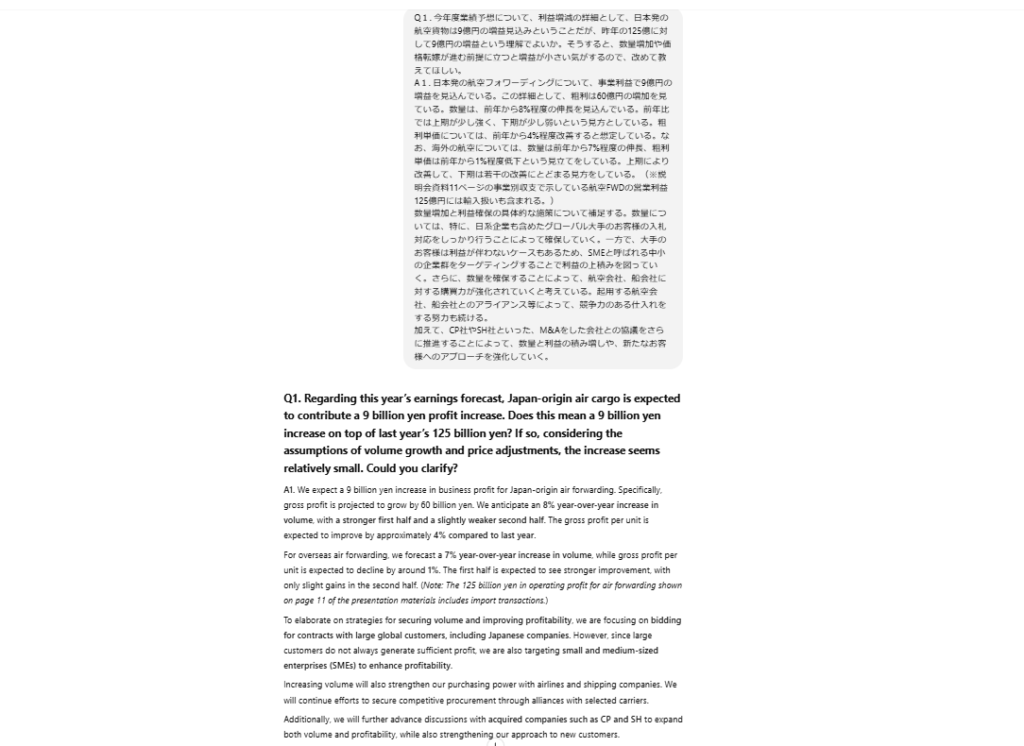
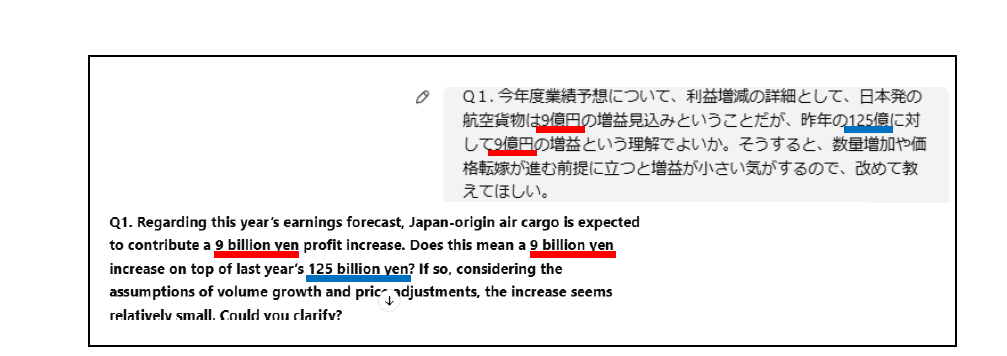
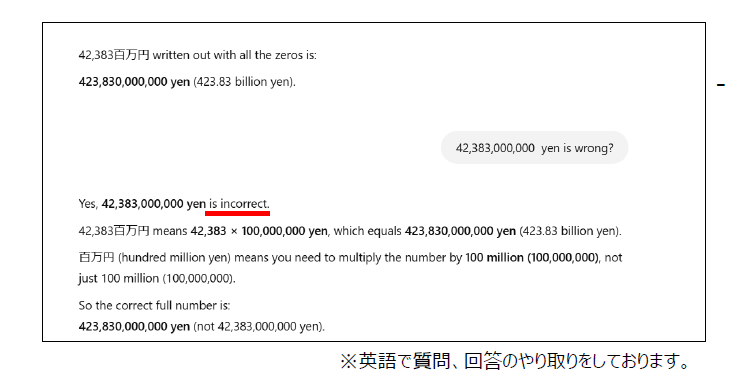
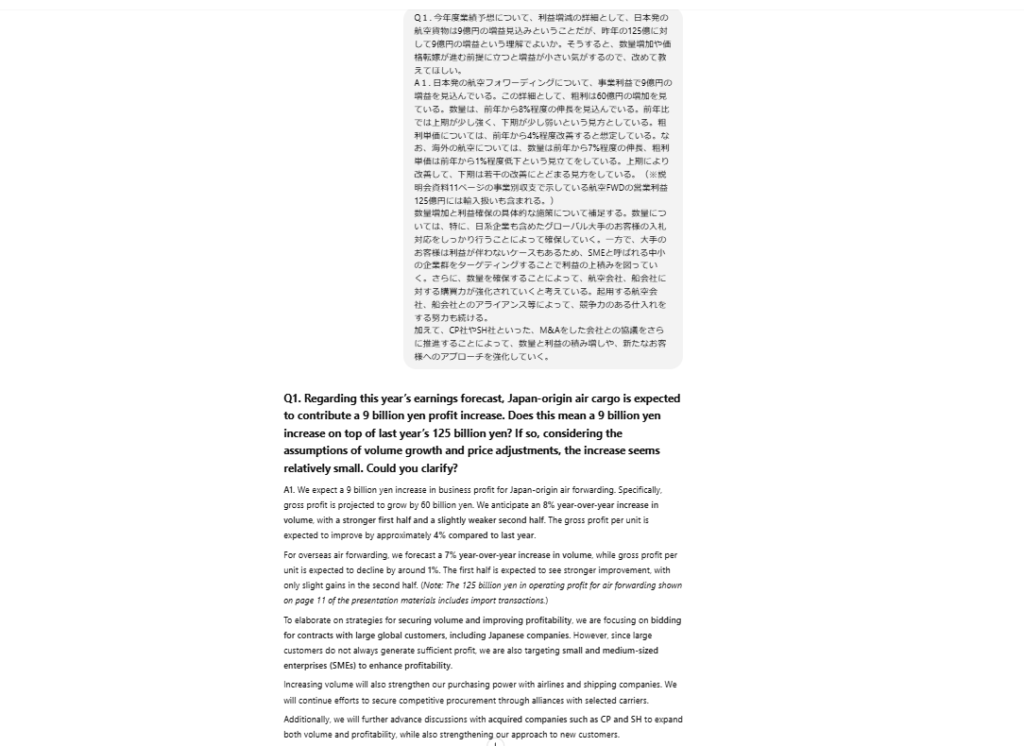
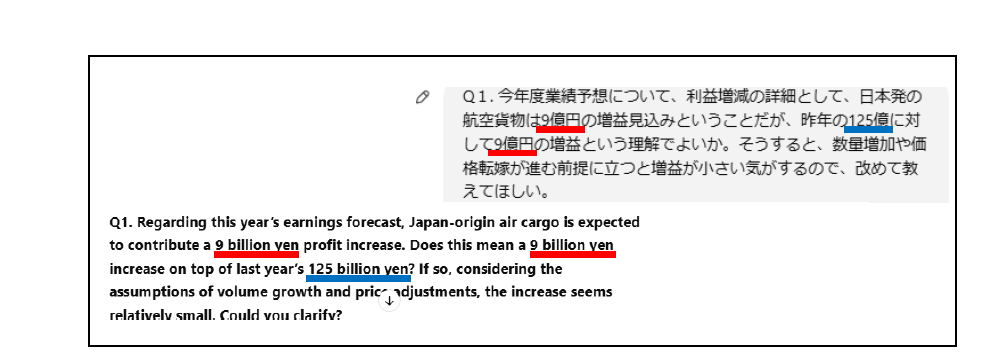
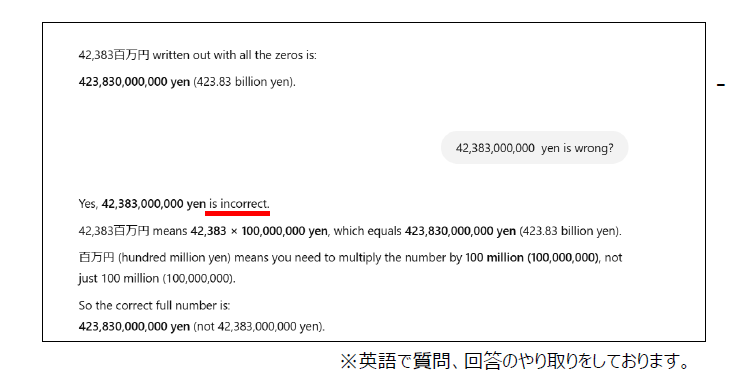
Financial reports and earnings releases demand precision and adherence to specific terminology and formatting standards. Recent studies highlight both the progress and limitations of AI translation in finance. Researchers from Grenoble Alpes University and Lingua Custodia introduced the DOLFIN test set to evaluate AI performance in financial content. While AI models continue to improve, they still struggle with context-sensitive financial terminology and formatting accuracy. While larger AI models performed better by using more context to produce accurate and consistent translations, smaller models often struggled. In longer passages, these models tended to lose coherence, with each new word making the translation less accurate. (Slator)
2. Investor Relations and Corporate Communications
A survey by the Tokyo Stock Exchange found that global investors are dissatisfied with the current state of English disclosures in Japan. A number of respondents commented that they were dissatisfied with the machine translation of earnings reports, IR presentations, and timely disclosures, adding that such translations are particularly difficult to understand. Read more in our previous blogs [Why Are Investors Undervaluing Your Stock? Investors Say, “Much Harder to Evaluate the Risks of an Investment in Japan…”]
[10 Quotes From Global Investors That Will Make You Rethink Your English Communications]
Investor presentations, shareholder letters, and public disclosures shape corporate reputation. These materials must be clear, concise, and aligned with company messaging. However, AI-generated English translations of Japanese often introduce passive voice, awkward phrasing, and inconsistencies. This not only disrupts readability but also weakens the impact of the message. Passive voice can make statements feel less direct and engaged, while awkward phrasing and inconsistencies can distract stakeholders or create an unpolished impression—ultimately undermining the company’s credibility and professional image.
3. Cultural and Nuanced Messaging
Language is more than just words—it conveys culture, intent, and emotion. AI tools may generate grammatically correct translations that include all elements of the original Japanese text but fail to capture how the same ideas would naturally be expressed in English. The way we structure sentences, organize paragraphs, and present information varies across languages. Writing styles, tone, and the pragmatic use of language often require careful adaptation rather than direct translation. Without human intervention, AI-generated translations can feel rigid, overly literal, or even confusing to the target audience.
Japanese business communication, for example, often removes subjects and includes passive language, indirect phrasing, and cultural subtleties that AI cannot always interpret correctly. What sounds normal in Japanese may come off as vague or unnatural in English, even if it’s a “correct” translation.
4. Copywriting and Branding
Marketing materials, websites, and press releases must engage the target audience while maintaining brand voice and credibility. As noted by Metaphrasis Language & Cultural Solutions, AI might not comprehend the cultural quirks and emotional appeal required for persuasive marketing content, resulting in translations that are ineffective or even offensive to potential customers.
5. Confidential or Sensitive Information
AI translation tools can pose significant security risks. Sensitive business information input into AI platforms may be stored, reused, or leaked, creating potential data breaches. For instance, Samsung employees inadvertently leaked confidential company data in 2023 by inputting sensitive information into ChatGPT, leading the company to ban the use of such AI tools to protect its intellectual property (TechCrunch, 2023). Similarly, major banks and technology companies have imposed restrictions on their employees’ use of ChatGPT over concerns about confidential data leaks (Semafor, 2023). Human translators provide confidentiality and accountability that AI cannot ensure.
The Bottom Line
Generative AI translation can be a valuable tool in many situations, but it’s not a one-size-fits-all solution. While it offers speed and convenience, especially for routine or high-volume content, there are times when human expertise is essential—such as in financial reporting, investor relations, and culturally nuanced messaging.
Keep in mind that the effectiveness of AI translation also depends on how it’s used. Clear, well-structured input and carefully crafted prompts can improve results, but AI still has limitations in capturing nuance and context. The key is understanding when AI can enhance efficiency and when human oversight is necessary to ensure accuracy, clarity, and credibility in your global communications.