
Writing Is More Than ‘What’ You Say

(日本語ブログ:何を書くかだけでは伝わらない:「どう書くか」が重要|One World Link

In the world of investor relations and global communications, we sometimes become so focused on what we need to communicate that we forget to consider how best to convey our messages. Writing clear, professional English isn’t always about what you say, but how you present the information. The structures and format of your English text greatly affect how easily readers understand your message.

One technique professional business English writers use is to break information into clear, organized sections. For many overseas readers, long blocks of text can be tiring and difficult to follow. Whether you’re preparing an investor presentation, a shareholder letter, or a corporate report, dense paragraphs can cause readers to lose focus and miss key points.

To make your writing clear and engaging, try using bullet points and numbered lists. These tools help you present key information concisely and guide readers through your main ideas—an essential skill for anyone managing global corporate communications.

Why Bullet Points and Lists Work

Overseas audiences prefer concise communication.

Many English readers tend to skim through text, especially in business contexts where time is often limited. They want to find key information quickly and clearly.

Bullet points and numbered lists help transform dense information into a structured, easy-to-read format. These structures not only improve readability but also give your writing a more professional and polished look, making it easier to communicate complex ideas to overseas stakeholders.

Here are just a few benefits:

  • Visually appealing – Breaking up text with bullets or numbers creates breathing room on the page. It’s easier on the eyes.
  • Quick to read – Instead of forcing your audience to sift through a paragraph, bullets deliver the highlights instantly.
  • Easy to understand – Lists make it easy to organize complex ideas or multiple points in a way that’s simple to follow.

For non-native speakers, bullet points also simplify writing, reducing the chance of misinterpretation and ensuring the message is clear

Consider this example:

Our company adheres to multiple standards and recommendations, including the Task Force on Climate-related Financial Disclosures (TCFD) guidelines, the Global Reporting Initiative (GRI) standards, the United Nations Sustainable Development Goals (SDGs), the International Integrated Reporting Framework (IIRF), and the recommendations of the Sustainability Accounting Standards Board (SASB).

VS

Our company adheres to the following standards and recommendations:

  • Task Force on Climate-related Financial Disclosures (TCFD)
  • Global Reporting Initiative (GRI)
  • United Nations Sustainable Development Goals (SDGs)
  • International Integrated Reporting Framework (IIRF)
  • Sustainability Accounting Standards Board (SASB)

See the difference? This information just became way easier to digest with bullet points!

Buller Points or Numbered Lists?

Use bullet points when the order of items doesn’t matter. Research by Ho (2023) found that bullet points enhance the reading experience by helping readers absorb information more quickly and with less effort. For example:

  • Breaking down a long list into bite-sized information
  • Summarizing main ideas
  • Highlighting the most important information

Choose numbered lists when the sequence or ranking is important. They work well for:

  • Step-by-step instructions
  • Prioritized tasks
  • Chronological events or processes

Take Note

This article by Clearly Scientific Ltd. talks about the dos and don’ts of bulleted lists. Specifically, I’d like to point out the following:

  • Avoid more than seven items in a bulleted list
  • Keep text as short as possible
  • Use a consistent text structure

Simply throwing the same long-winded, run-on sentences into bullet points won’t help clarify your message. The entire point of using bullet points and numbered lists is to break down your information into easily digestible bits of information. Too many, and the lists might seem daunting to readers.

Consistency is also key. Mixing verb and noun phrases is not standard in English. Use parallel structure in your bullet points and lists (e.g., if most points begin with a verb, make sure all other points do too). Be sure to also keep lists around the same length. As the article by Clearly Scientific states, “…switching from short text to long text is distracting, and may give a misleading impression of the importance of the entries.”

Ready to Transform Your Writing?

The next time you draft English corporate communications, remember that overseas readers value clarity and structure. Break up long paragraphs, use bullet points or numbered lists where appropriate, and make your messages easy to scan.

While these techniques may not apply in the same way to Japanese writing, they are highly effective in English business communication. Try applying them in your next IR report or stakeholder message.

Trust us, your audience will thank you for it.

August 2025 Update on Generative AI Translation Quality

(日本語ブログ:生成AI翻訳の品質は今どうなっているか?|One World Link

Is your company incorporating generative AI as part of the DX push to save time and money? Like many companies, you might be using DeepL, ChatGPT, Gemini, or other generative AI to translate Japanese into English. But what’s the state of generative AI Japanese-to-English translation as of summer 2025?

OWL translators are no strangers to generative AI or machine translation. Lately, we’ve noticed some quirks in quality that users should know about.

In this blog post, I’ll share several real examples of odd or problematic translations we’ve encountered. These issues highlight what to watch for when using AI translation tools for Japanese-to-English translation, especially for IR or corporate communications. All examples are taken directly from screenshots we’ve collected.

Tip 1 – Don’t skip the simple stuff
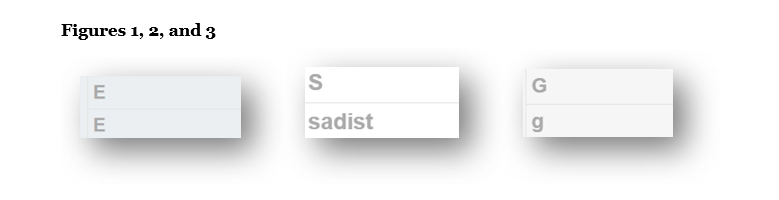
Figures 1–3 show the acronym ESG split across three lines, which led the machine translation tool to render the letters as “E,” “sadist,” and “g.” While no human translator would assume “S” stands for “sadist,” this still raises red flags.

The capital/lowercase inconsistency and the shift from a letter to a word show just how fragile AI output can be, especially with simple formatting quirks. Don’t assume short or seemingly simple content will be handled correctly. Always check for consistency.
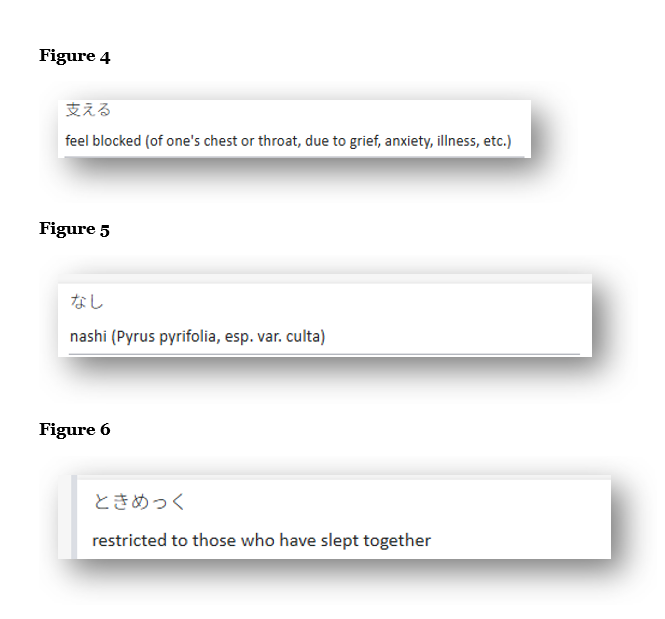
Figures 4–6 show another common issue: dictionary-style output. These translations aren’t technically “wrong,” but they include excessive explanations, parentheses, or wordy definitions that don’t belong in the context of a professional document. In fact, the machine translation used the wrong definitions entirely. The correct translations in context were as follows:

支える→ Support

なし → N/a

ときめっく→ TTOKIMEKKU

Note: In the original Japanese, ときめっく was used as a proper noun (the name of a facility). AI often struggles with proper nouns, fixed translations, and company- or industry-specific terms. Always double-check how these are handled, especially in official documents.
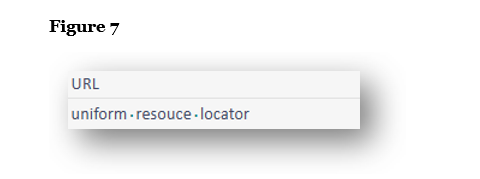
In Figure 7, the translation spells out “URL” as “uniform resource locator,” something rarely done in English. There is no reason to spell this out when URL is the common term.
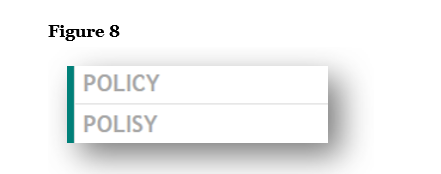
Figure 8, unfortunately, requires no explanation and is entirely unacceptable. “Polisy” is simply a misspelling of “Policy.”  

Tip 2 – Double and triple check your numbers

Sometimes generative AI gets numbers completely wrong.

→See our blog here for more examples in English and Japanese
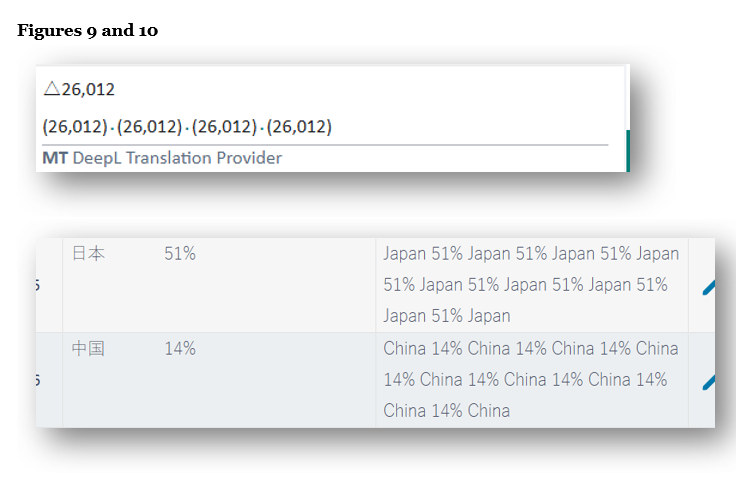
Figures 9 and 10 show examples where the translation tool repeats a number four to eight times. The number itself is correct, but the repetition is not. Always check numerical output carefully.
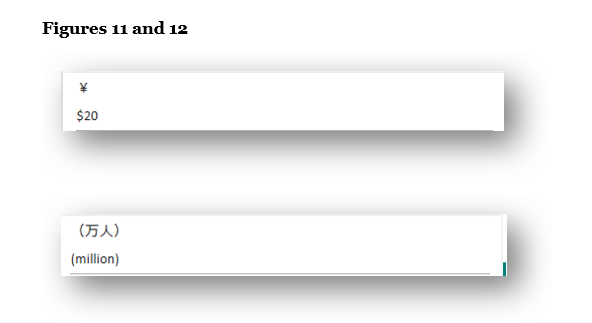
Figures 11 and 12 show more serious mistranslations: ¥ converted to “$20,” and 万人 translated as “million people.” These are easy to catch in isolation but could easily be missed in a lengthy financial report, especially if only the English output is reviewed for grammar, word choice, and natural language use.
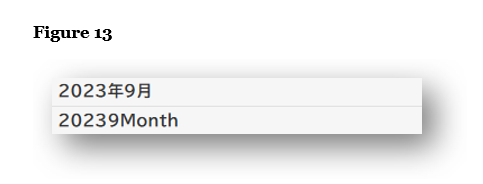
Figure 13 shows a bizarre translation of a simple date. “20239Month” suggests the tool tried to translate each part of the Japanese date individually, then collapsed them into a single unreadable string. This translation is non-standard in the use of “month” as well as the lack of spaces.

Tip 3 – Watch out for the occasional completely wrong and inappropriate word
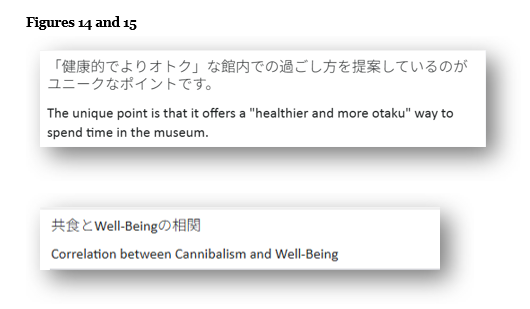
Figures 14 and 15 here depict “otoku” translated as “otaku” and 共食 translated as cannibalism. I probably don’t have to explain why this is wrong. Mistakes like these are potentially embarrassing.

These two examples may be examples of generative AI learning from incorrect or poorly reviewed public translations. As more flawed outputs get recycled into training data, we’re beginning to see these types of errors surface more frequently.
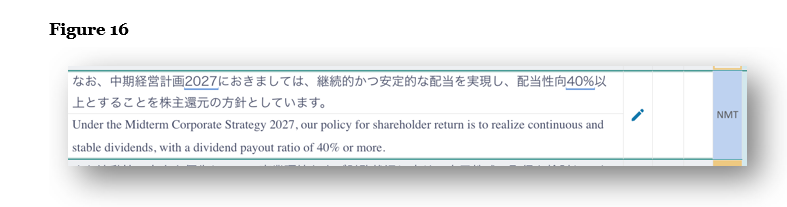
Figure 16 shows 中期経営計画, a term common to most investor relations documents, as “Midterm Corporate Strategy.” The standard English translation for 中期経営計画 is “medium-term management plan.”

First, midterm should be hyphenated when used as a compound adjective (i.e., “mid-term”).

Second, and more importantly, this phrase appears to reflect the official English name a specific company uses for its own medium-term management plan. In other words, the tool has likely “learned” this translation from prior public use, despite it being nonstandard.

In all our years working with generative AI and machine translation tools, we’ve never seen 中期経営計画 rendered as Midterm Corporate Strategy by default. This may be another example of how generative AI draws from real-world usage, including company-specific terms, even when they don’t align with standard or widely accepted translations. If a nonstandard translation is used publicly and goes unchecked, it can be absorbed into the AI’s training data and later offered as a “valid” translation. This reflects a classic garbage-in, garbage-out problem: the more flawed inputs the model is exposed to, the more likely it is to produce flawed outputs in the future.

Find out why “mid-term” is the incorrect translation for 中期 on our blog (English + Japanese)

Tip 4 – Check for missed spaces
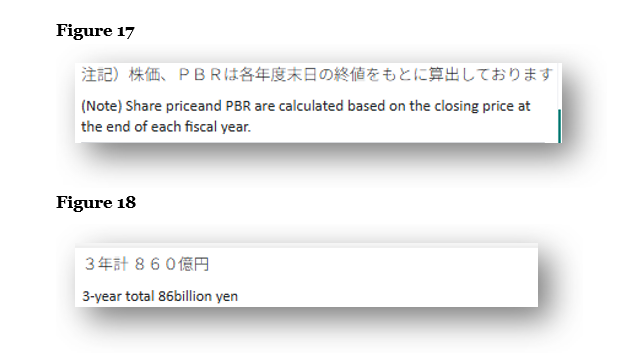
Figure 13 showed how machine translation can omit spaces within a date. Figures 17 and 18 reveal similar spacing issues in full sentences. The sentence in Figure 17 is missing a space between “price” and “and,” while in Figure 18 we are missing a space between the number (86) and unit (billion).

These may seem like minor errors, but they can affect readability and look careless in formal documents. Allow me to also note that, while it depends on context and the style guide in use, numbers under 10 are generally spelled out in body text. Hyphenated adjectives like “3-year total” are typically written as “three-year.”

So why is this happening?

We suspect two reasons for the quality quirks. First, we think that generative AI may be becoming self-referential, “learning” from its own past low-quality output accepted blindly by users. Second, we suspect that the more generative AI learns from translations “in the wild,” the more “garbage” (low-quality) translations generative AI comes to accept as correct examples.

These phenomena align with warnings from data quality experts. As Robert Stanley, Senior Director at Melissa, explains in a recent SD Times article , “If you’re training your AI model on poor quality data, you’re likely to get bad results.” He also stresses that without data that is “accurate, complete and augmented or well-defined… the outputs of the AI model won’t be reliable.” In other words, garbage in, garbage out still holds true.

Stanley also notes that LLMs are often designed to please the user, which “sometimes means giving answers that look like compelling right answers, but are actually incorrect.”

[Source: SD Times, “Garbage in, garbage out: The importance of data quality when training AI models” Published June 2, 2025. https://sdtimes.com/data/garbage-in-garbage-out-the-importance-of-data-quality-when-training-ai-models]

The source and quality of training data used in generative AI and machine translation tools may be to blame for these quality issues as well. As highlighted in recent research published in Nature and reported by the Financial Times, AI models trained on synthetic data—content generated by earlier versions of AI—are at risk of what researchers call “model collapse.” Over successive training cycles, these models can begin to reinforce their own mistakes, leading to distorted or nonsensical outputs. In translation, this could mean that awkward, incorrect, or overly literal machine-translated phrases become embedded as standard over time.

[Source: Financial Times. “Model collapse: how AI models trained on synthetic data can quickly degrade.” Published July 25, 2024. Based on research originally published in Nature. https://www.ft.com/content/ae507468-7f5b-440b-8512-aea81c6bf4a5]

To Summarize

Translation tools are becoming more advanced, but they are still quite unreliable, especially if they are “learning” from flawed or inconsistent public content. Over time, these self-reinforcing mistakes can lead to nonstandard or even misleading translations becoming normalized.

Whether the issue is a small inconsistency, a mistranslated number, or an entirely inappropriate word, even one error can affect the quality and credibility of your translations. It is more important than ever to stay alert to these risks and take steps to ensure the final English reads naturally, clearly, and professionally. If you’re unsure about the quality of a translation, or need a second set of eyes, our team of native English translators can help you make sure your materials are accurate and investor-ready.


Mastering Sentence and Paragraph Length

(日本語ブログ:あなたの英訳文と段落は長すぎませんか?|One World Link

One of the most common challenges in translating Japanese business documents into English is adjusting sentence and paragraph length for readability. Japanese writing often features long, complex sentences that connect multiple ideas, conditions, and conclusions within a single structure. While this style is accepted in formal Japanese, it can result in dense and difficult-to-read English when translated too literally.

When it comes to crafting impactful English for investor relations (IR) communications, conciseness is key. Various government issued handbooks on readability and accessibly comment on sentence length and plain language use. Concise sentences and paragraphs are key to capturing and maintaining your reader’s attention. Adjusting sentence and paragraph length in Japanese to English translation is essential to ensure clarity and communicate your message to stakeholders worldwide.

However, if your structure becomes too short, they might seem overly simplistic. So, how do you strike the perfect balance? Let’s dive into the basics.

What’s Just Right for Business English?

OWL recommends paragraphs with three to four sentences, with each sentence containing an average of 20 words. Our recommendations are based on using plain English in translated investor and corporate communications. Plain English is clear, direct writing that avoids unnecessary complexity. This writing helps readers understand information the first time they read it, which is especially important in disclosures, reports, and other materials intended for overseas stakeholders.

The U.S. Securities and Exchange Commission (SEC), which oversees investor protection and corporate disclosure, promotes similar standards. In response to concerns about overly complex financial language, the SEC published the Plain English Handbook in 1998 to help companies communicate more clearly with investors. The handbook encourages the use of short sentences whenever possible, noting that concise writing improves understanding and reduces the risk of misinterpretation, especially in legal or financial documents.    

[Source: U.S. Securities and Exchange Commission, A Plain English Handbook: How to Create Clear SEC Disclosure Documents (1998) https://www.sec.gov/pdf/handbook.pdf]

Remember to also mix sentence lengths!

Short sentences deliver key points with punch while longer sentences provide context and nuance. Together, they create a dynamic flow that keeps readers interested and aids comprehension. A mix of shorter and longer sentences ensures clarity and rhythm, making your writing more engaging.

Example

Japanese (one sentence)

長年にわたり蓄積してきた高度な技術と専門知識を活用するとともに、気候変動や資源不足、人口動態の変化といった社会課題に取り組みながら、イノベーションの促進、グローバルなパートナーシップの拡大、そして急速に変化する市場環境においてレジリエンスを確保するための堅実なガバナンス体制の維持を優先する長期経営ビジョンに沿った取り組みを実施することで、持続可能な成長を達成し、企業価値を向上させることを目指します。

English (one sentence)

By leveraging our strengths in advanced technology and expertise accumulated over decades, while simultaneously addressing societal challenges such as climate change, resource scarcity, and demographic shifts, we aim to achieve sustainable growth and enhance corporate value by implementing initiatives aligned with our long-term management vision, which prioritizes fostering innovation, expanding global partnerships, and maintaining robust governance structures to ensure resilience in a rapidly evolving market environment. 

Revised English (multiple sentences)

We leverage decades of expertise and advanced technology while addressing societal challenges including climate change, resource scarcity, and demographic shifts. Guided by our long-term management vision, we prioritize fostering innovation, expanding global partnerships, and maintaining robust governance. These initiatives aim to ensure resilience in a rapidly evolving market while achieving sustainable growth and enhancing corporate value.

What is the Flesch-Kincaid Reading Ease, and Why Should You Care?

The Flesch-Kincaid Reading Ease score is a powerful tool for evaluating the readability of your writing. This score analyzes sentence and word length to determine how easily your text can be understood. Higher scores mean better readability.

How to Find Flesch-Kincaid in Microsoft Word

  1. Open your Word document.
  2. Go to “ファイル” (File) and select “オプション” (Options).
  3. Under “言語” (Language), ensure that you have English Language downloaded and proofing tools are installed.
  4. Navigate to “文章校正” (Proofing) and check the box for “文書の読みやすさを評価する” (Show readability statistics).
  5. Run a spell check (“スペルチェック”) under the “校閲” (Review) tab to see your Flesch-Kincaid score.

Note: This process may depend on the version of Microsoft Word you work from. Some versions require to you to finish the spell check first and then select “Insights” to see readability scores.

A score of 60-70 is considered conversational and accessible. However, OWL recommends a Reading Ease score of 35-40 for Japanese to English translations to maintain a professional tone suitable for IR communications. This score ensures sophistication while remaining reader-friendly. For original English writing, a score of 50-60 is preferable.

In Short…

  • Flesch-Kincaid Reading Ease: 35-40 for professional readability in IR translations.
  • Average Sentence Length: 20 words to balance readability and detail.
  • Paragraph Length: Three to four sentences for structured and digestible communication.

These guidelines ensure that your disclosures resonate with global investors without losing the nuance of your original message.

Your Action Plan

Ready to elevate your IR communications? Start here.

  1. Analyze Your Writing: Use the Flesch-Kincaid tool in Word to evaluate your readability score.
  2. Edit for Balance: Shorten overly long sentences and combine overly short ones for variety.
  3. Ask for Feedback: Share your drafts with a colleague or use an English proofreading tool.
  4. Track Improvements: Keep a log of your readability scores over time to measure progress.

Let’s Write Your Story Together

OWL specializes in helping IR teams craft timely and impactful English disclosures. Our expertise ensures your story reaches global investors with precision and clarity. Contact us today to transform your IR communications. Together, we’ll tell your story to the world.

Do You Create Reports for Both Types of Readers in the West?

(日本語ブログ:貴社の英語の報告書は「読み込む人」と「流し読みする人」両方に伝わる内容になっていますか?|One World Link

Western readers typically fall into two categories: detailed readers and skimmers. Detailed readers go through content thoroughly, looking for depth and context, while skimmers scan for key points, often relying on headings, subheadings, and captions to extract the main ideas quickly. Effective writing must cater to both types, ensuring that information is accessible without losing depth.

Are you a reader? Or a skimmer?

More importantly, do you write for both of these audiences?

In today’s fast-paced financial landscape, stakeholders rely on concise and clear information to make informed decisions. Shareholders and analysts expect reports that highlight key data, trends, and performance metrics at a glance. Investors and institutional stakeholders scan financial documents, looking for insights that drive confidence in corporate strategy.

Clear, informative headings and captions help engage both readers and skimmers, making your information easier to understand and more effective.

Why Informative Headings and Captions Matter

Think about the times you’ve scanned an earnings report, investor presentation, or annual report, looking for key financial data and company strategy insights. Your audience does the same. Consider the following headings.

Group Initiatives

2024 Results

Our Vision

What information can you take away from these? Not much, I expect.

These headings leave readers unsatisfied and disinterested.

What about…

Group Key Initiatives

Revenue Growth in 2024

Our Vision to Drive Sustainable Growth

Although we’ve added more content, these headings are still relatively vague. Now consider

Group Key Initiatives to Reduce Carbon Emissions

20% Revenue Growth in 2024

Driving Sustainable Growth Through Renewable Energy Investments

These headings immediately capture attention and let the reader know what to expect if they continue reading.

Here’s a few more simple examples to give you a better idea of what makes headings informative.

Vague Headings

  • Key Results
  • Our Commitment to the Future
  • Sustainability Initiatives

Informative Headings

  • Q4 2024 Key Results: Record $500M Net Profit and 12% YoY Growth
  • Our Commitment to Achieving Carbon Neutrality by 2050
  • Solar Power Installations to Reduce Carbon Emissions

Specifying key information in headers makes a world of difference to all readers.

The same can be the same for captions. Captions serve as quick reference points for readers, reinforcing key messages and providing context to visuals. Well-crafted captions help investors and analysts absorb critical details at a glance, making reports and presentations more effective.

Take a look at these captions. Which ones resonate more with you?

Incorporating informative headings and captions is essential for enhancing readability and engagement in your content. Here are some best practices.

  1. Be Descriptive: Headings inform readers of what is to come in a particular section. Include specific details from the particular section to help find key information faster. Using descriptive captions helps attract attention, encourage engagement, and improve user experience. (savvy-writer.com). Descriptive headings help search engines, supporting SEO benefits and user-friendliness (Seowind).
  1. Use Keywords: Integrate keywords for search engine indexing and ranking (savvy-writer.com). The strategic use of keywords is also crucial to SEO  (Seowind).
  1. Prioritize Clarity: Avoid jargon and complex language in your headings. (scribber). Clear and concise wording makes it easier for readers to grasp the main idea quickly, enhancing their overall experience.
  1. Align with Your Purpose: Tailor your headings to reflect the content’s purpose and the audience’s needs. For instance, in proposals, structuring headings to correspond with evaluation criteria can facilitate easier navigation and comprehension.

Before finalizing any heading or caption, ask yourself:

  • Does this heading or caption clearly convey the content?
  • Would someone skimming understand the key takeaway?
  • Does this heading add value to the overall message?

Quiz Time!

Which of the following headings is the most informative? Why?

A) Sustainability Efforts
B) FY2025 Target to Reduce Carbon Emissions by 33%
C) Details of Sustainability Efforts
D) FY2025Carbon Reduction Goals

Which caption provides the clearest information? Why?

A) Ariel view of expanded factory
B)
Workers at the new manufacturing facility in Osaka on opening day
C)
Facility orientation in April
D) Engineer meeting

If you chose (B) for both questions, you would be correct! FY2025 Target to Reduce Carbon Emissions by 33% because it provides a specific goal and timeframe, making it clear to readers what the content will discuss.

Workers at the new manufacturing facility in Osaka on opening day is the most informative caption because it describes the content of the image in a clear and engaging way, providing context to the viewer.

Final Thoughts

Clear and informative headings and captions are more than just a design choice—they’re a fundamental aspect of effective communication. Whether you’re presenting data, sharing a vision, or delivering a report, let your headings drive the narrative and keep your audience engaged.

June 2025 Quiz Answers

(水) 06月11日

Q. 次のうち、ビジネス英語として最も適切な構文が使われているものを選んでください。

a. Due to cost reduction measures, operating income increased.
b. We implemented cost reduction measures, resulting in increased operating income.
c. Operating income increased due to cost reduction measures.

正解:c.
解説:
選択肢cは、簡潔で明確な構文となっており、ビジネス英語で推奨される「主要な情報を最初に伝える」スタイルになっています。
bも意味は正しいですが、構造がやや複雑で、動詞の主語が曖昧になりやすいため、読み手に負担がかかることがあります。
aは “Due to…” で始まる 導入句(introductory clause を使用しており、ビジネス文書では避けた方が読みやすくなります。

    新たな製品やサービスの開発を通して、クライアント様のお役に立ちたいと考えております。
    お手数をお掛けしますが、簡単なアンケートにご協力をお願いいたします。

    英文ビジネスライティングの学習経験はございますか?

    学習された期間は何年間ですか?

    英文ビジネスライティングをさらに学びたいと思いますか?


    (金) 06月13日

    Q. 次の文をビジネス英語に修正する場合、最も適切なものを選んでください。

    Results of the analysis indicated high water usage.

    a. The results of the analysis indicated high water usage.

    b. Analysis results indicated high water usage.

    c. The analysis’s results showed high water usage.

    正解:b.

    解説:

    “Analysis results” は簡潔で読みやすく、ビジネス英語でよく使われる自然な表現です。

    aのように “The results of the analysis” と書くと、意味は通じますが冗長になります。

    cは “analysis’s” という所有格を使っており、名詞の所有格は不自然かつ読みにくくなることが多いため、ビジネス文書では避けるのが望ましいです。


    (水) 06月18日

    Q.次のうち、最も簡潔で自然なビジネス英語の表現を選んでください

    In order to enhance employee engagement, we conduct regular surveys.

    a. We conduct regular surveys in order to enhance employee engagement.

    b. We conduct regular surveys to enhance employee engagement.

    c. In order to enhance engagement, surveys are conducted regularly.

    正解:b.

    解説:

    “to enhance” は “in order to enhance” と同じ意味を持ちつつ、より短く明快な表現です。

    aは文法的に正しいものの、”in order to” の使用でやや冗長になります。

    cは受動態(surveys are conducted)を使用しており、ビジネス英語では基本的に能動態が推奨されます。能動態の方が、誰が何をするのかを明確に伝えやすくなります。


    (金) 06月20日

    Q.次のうち、数字の表記スタイルとして最も正しいビジネス英語の表現を選んでください。

    a. The Board consists of two outside directors and seven internal directors.

    b. The Board consists of two outside directors and 7 internal directors.

    c. The Board consists of 2 outside directors and 7 internal directors.

    正解:a.

    解説:

    ビジネス英語では、10未満の数字(1〜9)は単語で書くのが基本スタイルです(例:two, seven)。

    aはこのルールに従っており、統一感があり丁寧な印象を与えます。

    bとcのように表記が混在していると、文章全体のスタイルが不統一になり、読み手に違和感を与えることがあります。


    (水) 06月25日

    Q.次のうち、数字の表記スタイルとして最も適切なビジネス英語の表現を選んでください。

    a. The Board met 9 times in fiscal 2024 and 11 times in fiscal 2025.

    b. The Board met nine times in fiscal 2024 and eleven times in fiscal 2025.

    c. The Board met nine times in fiscal 2024 and 11 times in fiscal 2025.

    正解:a.

    解説:

    基本的にビジネス英語では、10未満の数字は単語で書く(例:nine)のが原則です。ただし、同じ単位(ここでは “times”)で複数の数を並べる場合は、表記を統一すること(parallelism)が優先されます。
    aは「9」と「11」の両方を数字で統一しており、読みやすく、スタイルも整っています。
    bは原則どおり単語を使っていますが、「11」は本来アラビア数字で表すのが一般的で、視認性もやや落ちます。
    cは表記が混在しており、文のバランスが悪くなるため避けましょう。


    (金) 06月27日

    Q.英の文をビジネス英語に修正する場合、最も適しているものを選んでください。

    The Board discussed the proposal and agreed to proceed with it.

    a. The Board discussed and agreed to proceed with the proposal.

    b. The Board discussed the proposal and agreed to proceed with the plan.

    c. The proposal was discussed by the Board, and they agreed to proceed.

    正解:a.

    解説:

    ビジネス英語では、文章を代名詞(it, this, thatなど)で終えることは避けるのが望ましいとされています。代名詞を避けることで、文章の意味が明確になり、誤解を防げます。

    aは「the proposal」を再度使うことで意味が明確で、構文も自然です。

    bは「the plan」と異なる語を使用しており、「proposal」とは別のものを指しているように見える可能性があり、混乱を招きます。

    cは受動態で文章がやや冗長かつ複雑な印象になりやすいため、簡潔さに欠けます。

    Meet 10 ESG Players You Need to Know

    (日本語ブログ:今知っておくべきESGキープレーヤー10選|One World Link

    The landscape surrounding ESG (Environmental, Social, and Governance) is shifting rapidly, and Japanese corporations can’t afford to fall behind. With global investors demanding greater transparency and Japan’s mandatory simultaneous disclosure regulations taking effect in April 2025, understanding key ESG frameworks isn’t just important—it’s essential for maintaining credibility and competitiveness.

    Why This Matters to You

    As an IR professional, you are responsible for ensuring your company’s financial disclosures meet international standards. Overseas investors expect clear, high-quality ESG reporting that aligns with frameworks like ISSB, TCFD, and GRI.

    If your disclosures are inconsistent or fail to meet expectations, it could damage investor confidence and impact your company’s valuation. Understanding these ESG standards will help you navigate evolving regulations, boost investor trust, and position your company as a leader in sustainable business practices.

    The following is a partial list of the main global organizations that control the rules for ESG disclosures for publicly traded companies around the world.

    1. International Sustainability Standards Board (ISSB)

    https://www.ifrs.org/groups/international-sustainability-standards-board

    • Function: Develops a global baseline for sustainability reporting.
    • Key Standards: ISSB issued the IFRS Sustainability Disclosure Standards (S1 and S2), effective from 2024, to ensure consistency in climate-related and sustainability-related disclosures.

    2. Global Reporting Initiative (GRI)

    https://www.globalreporting.org

    • Function: Provides the most widely used framework for sustainability reporting.
    • Key Standards: GRI Standards cover economic, environmental, and social impacts, helping companies report on their broader ESG performance.

    3. Sustainability Accounting Standards Board (SASB)

    https://sasb.ifrs.org/

    • Function: Develops industry-specific sustainability disclosure standards.
    • Key Standards: SASB Standards identify financially material ESG issues for different industries.
    • Integration: SASB is now part of the Value Reporting Foundation (VRF), which merged into the ISSB in 2022.

    4. Task Force on Climate-related Financial Disclosures (TCFD)

    https://www.fsb-tcfd.org

    (Disbanded as of Oct. 12, 2023. Monitoring now conducted by ISSB of IFRS.)

    • Function: Provides a framework for climate-related financial disclosures.
    • Key Standards: TCFD recommendations focus on governance, strategy, risk management, and metrics related to climate risks.
    • Regulatory Adoption: Countries like the UK, EU, Japan, and Canada have mandated TCFD-aligned disclosures.
    • The ISSB’s standards, IFRS S1 and IFRS S2, fully incorporate the TCFD recommendations, providing a comprehensive framework for sustainability and climate-related disclosures.

    5. European Financial Reporting Advisory Group (EFRAG)

    https://www.efrag.org/en

    • Function: Develops the European Sustainability Reporting Standards (ESRS) under the Corporate Sustainability Reporting Directive (CSRD).
    • Impact: Requires large and listed EU companies to disclose ESG performance starting in 2024.

    6. United Nations Principles for Responsible Investment (UN PRI)

    https://www.unpri.org

    • Function: Sets voluntary ESG disclosure principles for investors.
    • Key Standards: Encourages companies to integrate ESG factors into investment decision-making.

    7. CDP (formerly Carbon Disclosure Project)

    https://www.cdp.net/en

    • Function: Manages global disclosure systems for environmental impacts.
    • Key Standards: Focuses on climate change, water security, and deforestation disclosures.

    8. U.S. Securities and Exchange Commission (SEC)

    https://www.sec.gov

    • Function: Regulates ESG disclosure for publicly traded companies in the U.S.
    • Key Rules: Proposed rules for climate risk disclosures, aligned with TCFD recommendations.

    9. International Organization of Securities Commissions (IOSCO)

    https://www.iosco.org

    • Function: Supports global securities regulators in aligning ESG reporting frameworks.
    • Key Role: Endorses ISSB standards to promote global adoption.

    10. Stock Exchanges and National Regulators

    Japan:
    Japan’s Financial Services Agency (FSA) https://www.fsa.go.jp/en/
    Tokyo Stock Exchange (TSE) https://www.jpx.co.jp/english/

    • Purpose: Regulates ESG disclosure requirements for publicly traded companies in Japan.
    • Key Rules: The FSA has mandated TCFD-aligned disclosures, and the TSE encourages listed companies to improve ESG transparency in their corporate governance reports.
    • Impact: Companies must integrate ESG factors into their financial reporting to comply with new regulations and attract foreign investment.

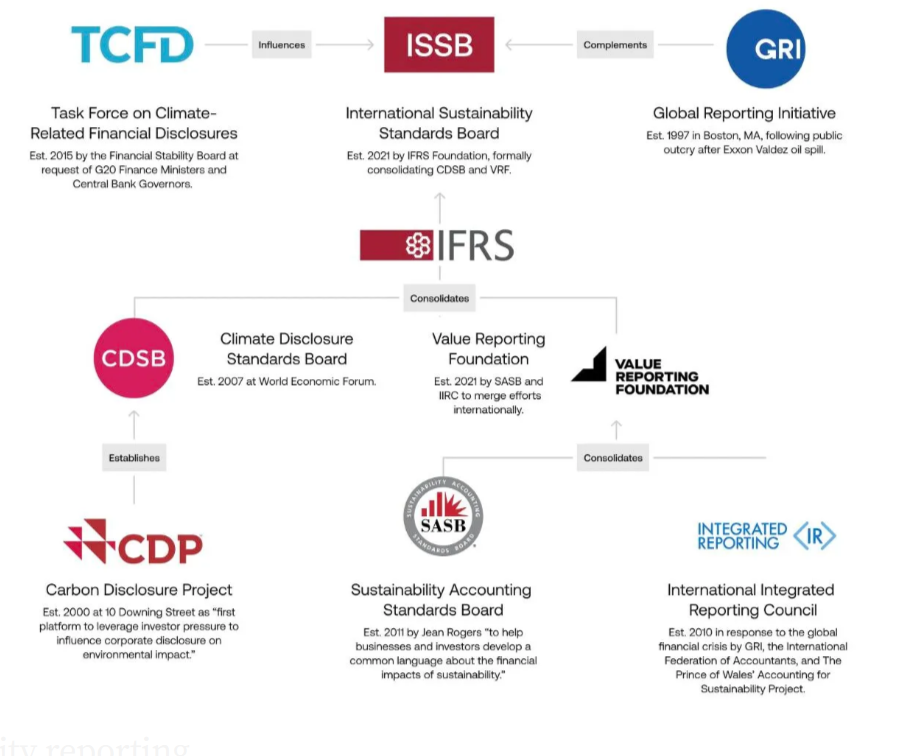
    Visualizing ESG Disclosure Convergence

    The ESG reporting landscape is undergoing significant consolidation. The ISSB is leading the effort to integrate various ESG disclosure frameworks into a unified global standard. The TCFD’s climate-related disclosure principles have directly influenced ISSB’s IFRS Sustainability Disclosure Standards (S1 & S2). Additionally, SASB and the Value Reporting Foundation (VRF) were merged into ISSB, while GRI remains a complementary framework.

    Source: ESG Professionals Network. An Infographic of the ESG Reporting Landscape.

    This visual highlights the key players shaping ESG reporting today, reinforcing the importance of aligning with ISSB’s emerging standards.

    Implications

    Given these developments, it’s crucial for IR professionals in Japan to:

    • Stay Informed: Regularly update your knowledge on global ESG reporting standards to ensure compliance and meet investor expectations.
    • Engage in Harmonization Efforts: Understand how global standards align with local regulations, especially with Japan’s commitment to TCFD-aligned disclosures.
    • Enhance Reporting Practices: Leverage the consolidated frameworks to provide transparent and comprehensive ESG disclosures, thereby boosting investor confidence and aligning with global best practices.

    7 Benefits of Publishing in HTML

    (日本語ブログ:HTMLで統合報告書を発信する7つのメリット|One World Link

    Do you publish your integrated reports as a PDF to download? If you’re not printing your material, you might be missing a chance to interact with stakeholders more effectively.

    PDFs have long been used and offer countless benefits to publishing and printing material. But corporate communications are evolving. As more companies switch to paperless communication, it turns out that PDFs are no longer the best option.

    How do you know your reports are being read? Do you track PDF downloads? Understanding these analytics is key to understanding your stakeholders and what they value most.

    Companies like Microsoft, Philips, BASF, and Bayer publish comprehensive online reports that use hyperlinks to enhance content connectivity and user navigation.

    Using HTML can help you not only offer easier access to readers but also understand your audience better through analytics.

    HTML vs PDF

    According to the Corporate Value Reporting Lab, the number of Japanese corporations publishing integrated reports has been on the rise. More than 1,000 Japanese companies published integrated reports in 2023, up from just over 200 in 2015, with the number of issuing companies expected to rise. (For more detailed information, see the Full Report.)

    While there isn’t any readily available data on the number of companies that publish using PDF vs HTML, the trend toward digital reporting is evident.

    Dr. Eloy Barrantes, Chief Executive Officer of Nexxar, commented in a 2018 news article on the IFRS Foundation Integrated Reporting website, “Although integrated online reports have become well-established in many companies, they are often neglected when it comes to conception and design. Good HTML reports consider media-specific requirements of the web as a publication channel.”

    He continued to add, “Today’s best-practice examples of online reports are often from companies that have been publishing HTML reports for many years and attach importance to it in both their publication and communication strategies.”

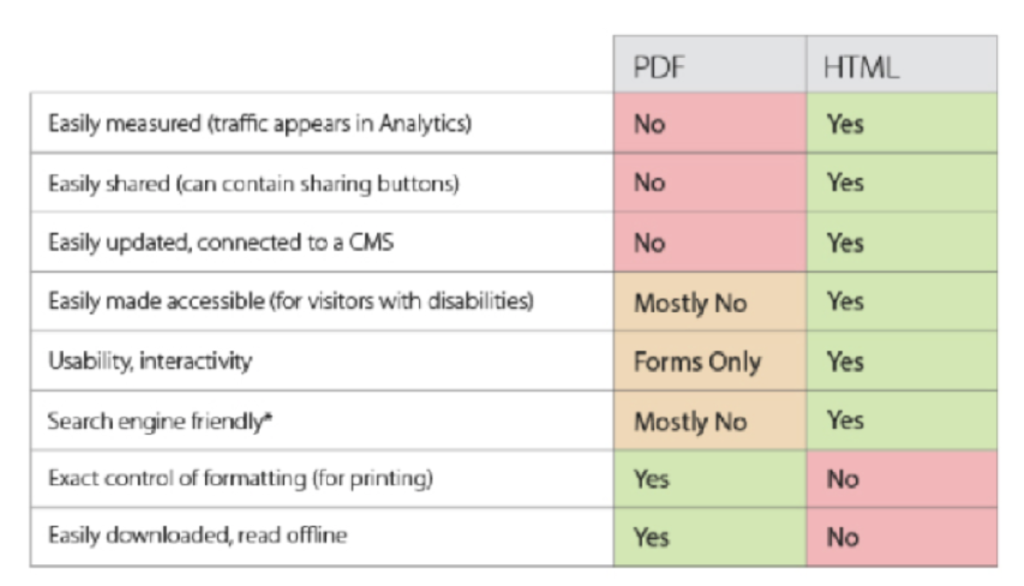
    For IR professionals, publishing reports in HTML can enhance readability, accessibility, and engagement, ensuring overseas stakeholders easily grasp key points. It also improves search engine visibility, helping more investors find your reports online. You might be asking yourself, “How exactly do PDFs and HTML differ?” Let’s take a look at the general differences in this chart.

    Figure Source: (Content Marketing Institute)

    Notice that HTML offers everything except the exact control for printing and the option to download for offline use. The advantages of using a PDF are centered around printing published material.

    Now, let’s take a more in-depth look at some of the benefits of HTML.

    1. Improved Accessibility
      HTML is far more accessible for users with disabilities. Assistive technologies like screen readers can easily interpret HTML, making your content available to everyone.
    1. Mobile-Friendly Experience
      Have you ever pinched and zoomed endlessly to read a PDF on your phone? HTML solves this. Its responsive design adjusts to any screen size, ensuring a seamless reading experience.
    1. SEO Benefits
      HTML content gets indexed by search engines, improving discoverability. PDFs, on the other hand, are less SEO-friendly and rarely optimized for search.
    1. Interactive Features
      HTML supports hyperlinks, videos, animations, and interactive data visualizations. This keeps readers engaged and makes your content more dynamic.
    1. Faster Loading and Performance
      No one likes waiting for a massive PDF to load. HTML is lighter and faster, especially for larger documents.
    1. Real-Time Updates
      Made a mistake? Need to add new information? With HTML, updates are instant. There’s no need for users to re-download anything.
    1. Analytics and Tracking
      Want to know which sections your readers find most interesting? HTML lets you track user behavior, giving you insights that PDFs can’t provide.

    Switching to HTML doesn’t just improve readability—it also saves time. You can update content instantly without needing to re-download files. This means fewer errors, faster revisions, and less stress when working under tight deadlines.

    Why Stick with PDFs?

    If your goal is digital-only distribution, there’s no reason to cling to outdated PDFs. Save them for printable materials—but choose HTML for a more user-friendly, modern approach.

    Not ready for a full transition? Start small—convert your key figures into HTML and compare reader engagement metrics. Many companies even offer a hybrid of both HTML and PDF. Check out the 2023 Bayer Annual Report for an idea of how this would look.

    In Short

    The digital landscape is evolving fast. Don’t let outdated formats slow you down. Using HTML aligns with global best practices, showing overseas investors that your company values innovation and accessibility. Adopting HTML-based integrated reporting allows organizations to not only future-proof communication strategies but also stand out as leaders in transparency and innovation. If your company is new to this concept, understand that embracing HTML reporting is not just a technological upgrade—it’s an opportunity to tell your story in a way that resonates with modern, digitally-savvy stakeholders.

    For an idea of what HTML reports (and hybrid examples) look like, check out any of the following websites.

    https://report.basf.com/2023/en

    https://www.clariant.com/en/Company/Integrated-Report/Integrated-Report-2023

    https://www.results.philips.com/publications/ar23

    https://www.microsoft.com/investor/reports/ar23/index.html

    https://www.intc.com/news-events/press-releases/detail/1716/intel-reports-third-quarter-2024-financial-results

    https://www.bayer.com/en/investors/integrated-annual-reports

    The Tiny Mark That Sparks Big Debates

    (日本語ブログ:小さなカンマが大きな議論に!オックスフォード・カンマは必要?|One World Link

    What is the Oxford Comma?

    The Oxford comma, also known as the serial comma, is one of the most debated punctuation marks in the English language. It appears before the final item in a list, just before the conjunction (usually “and” or “or”).

    • (Ex.) I bought apples, oranges, and bananas.

    In this sentence, the Oxford comma comes after “oranges.”

    Some critics argue this comma is often unnecessary and clutters writing, especially when the meaning is already clear.

    Why Is the Oxford Comma Important?

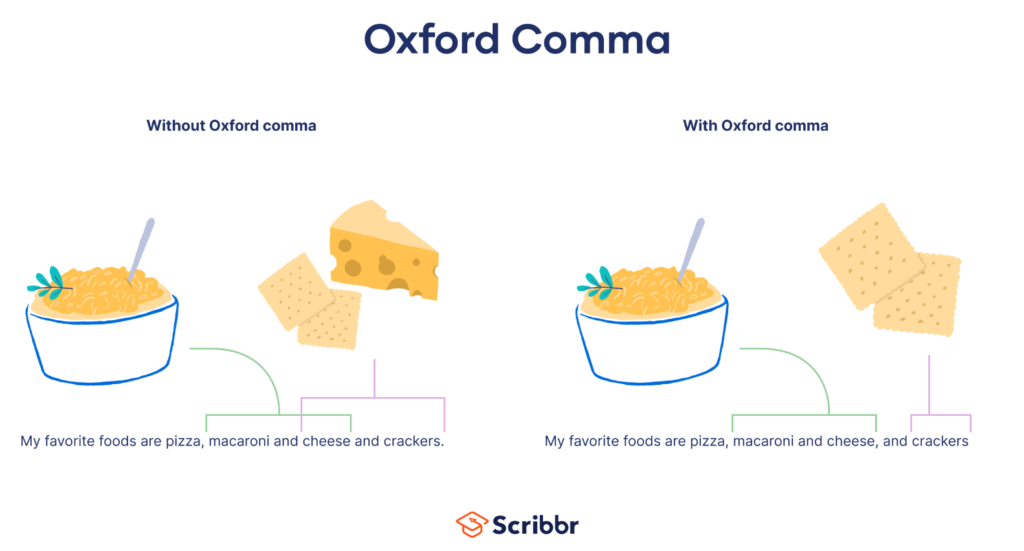
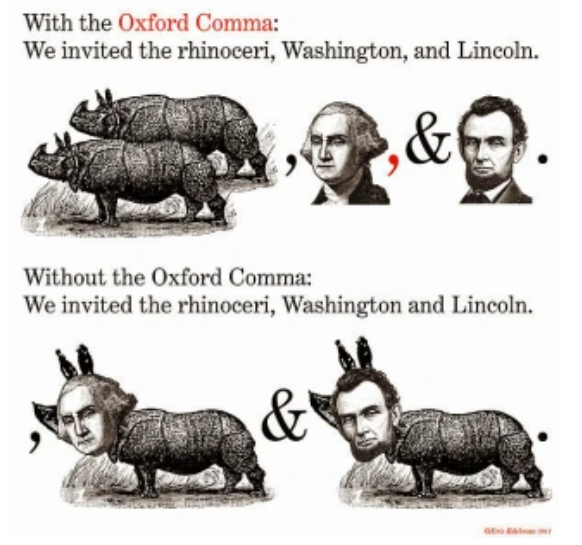
    While this comma may seem like a minor detail, the presence (or absence) of this tiny mark can dramatically alter the meaning of a sentence. Without it, readers might misinterpret the sentence—especially when the items in the list are complex or could logically be grouped together.

    Ex. 1

    Ex.2

    Ex.3

    Without Oxford comma: “The report was prepared by the marketing department, John and Sarah.”
    -This suggests that John and Sarah are part of the marketing department.

    With Oxford comma: “The report was prepared by the marketing department, John, and Sarah.”
    -This version clarifies that John and Sarah are separate contributors.

    Consistency Is Key

    Ultimately, the Oxford comma is a matter of style preference. The use of this comma is standard in American English and is often used in formal writing to avoid ambiguity. However, this comma is less common in British English and is typically reserved for cases where clarity is needed. Whether you choose to use the Oxford comma or not, it is important to remain consistent throughout your entire document.

    At OWL, we recommend using the Oxford comma.

    If you’re unsure whether to use the Oxford comma, consider these factors:

    • Clarity: Does omitting the comma make the sentence unclear or open to multiple interpretations?
    • Consistency: Are you writing in a style guide that requires (or forbids) the Oxford comma? For example, the Chicago Manual of Style recommends it, while the Associated Press (AP) style does not.

    Note: OWL values clarity and brevity in communicating your story to diverse stakeholders. For this reason, we use the Oxford comma, even though we follow the AP Stylebook.

    May 2025 Quiz Answers

    (水) 5月07日

    Q. ビジネス英語における、1文の理想的な平均語数はどれくらいでしょうか?
    a. 15 words
    b. 20 words
    c. 30 words

    正解:b.
    解説:
    ビジネス英語では、1文あたりの語数は約20語が目安とされています。内容を明確に伝えるため、40語を超える長文は避けた方がよいとされています。短く、わかりやすい文を意識しましょう。

      新たな製品やサービスの開発を通して、クライアント様のお役に立ちたいと考えております。
      お手数をお掛けしますが、簡単なアンケートにご協力をお願いいたします。

      英文ビジネスライティングの学習経験はございますか?

      学習された期間は何年間ですか?

      英文ビジネスライティングをさらに学びたいと思いますか?

      (月) 5月12日

      Q.次のうち、ビジネス英語として最も簡潔で自然な表現を選んでください。
      a. We conducted a hearing for the purpose of understanding stakeholder opinions.
      b. We held a hearing to understand stakeholder opinions
      c. We did a hearing for understanding stakeholder opinions.

      正解:b.
      解説:
      「Held a hearing to understand(〜するためにヒアリングを実施した)」は、簡潔かつ自然な表現です。
      aの「for the purpose of understanding(〜する目的で)」は文法的には正しいですが、冗長に感じられます。”to understand” に短縮することで読みやすくなります。
      cは “did a hearing” という不自然な表現を使っており、ビジネス文書には不適切です。

      (水) 5月14日

      Q.過度に形式的な次の英文を、最も適切なビジネス英語に修正したものを選んでください。
      We hereby announce the completion of the acquisition.
      a. We have completed the acquisition.
      b. The acquisition has been completed.
      c. We hereby inform you of the acquisition completion.

      正解:a.
      解説:
      「We have completed the acquisition(買収を完了しました)」は、現代のビジネス英語で好まれる、明確で直接的な表現です。
      bは受動態で、場合によっては使えますが、ビジネス英語では能動態の方が読みやすく自然に感じられます。
      cは “hereby” や “inform you of” などの硬い表現が並んでおり、現代の英語としてはやや古めかしく感じられます。

      (金) 5月16日

      Q. 次の日本語を、最も適切なビジネス英語に翻訳したものを選んでください。

      「コスト削減策を講じました。」

      a. We reduced costs.
      b. Cost-reduction measures were implemented.
      c. We took cost-reduction measures.

      正解:c.
      解説:
      「We took cost-reduction measures(コスト削減策を講じました)」は、自然でよく使われるビジネス英語の表現です。
      aは意味が近いですが、単に結果(コストを削減した)に焦点を当てており、「施策を講じた」というニュアンスが抜けています。
      bは受動態になっており、英語のビジネス文書では推奨される“能動態を90%以上使用する”という原則からは外れます。

      (水) 5月21日

      Q.次の英文の続きとして最も適切なものを選んでください。
      The board of directors consists of seven members who make positive contributions to board discussions.
      a. The board meets once a month to
      b. They meet once a month to…
      c. It meets once a month to…

      正解:a.
      解説:
      aのように、主語を繰り返して明示する方がビジネス文書では明確で好まれます。
      bの “They” は直前の “discussions” を指しているようにも読めるため、文意が曖昧になります。
      cの “It” は technically に “the board” を指していますが、ビジネス英語では “It” で文を始めると曖昧・抽象的な印象になりやすく、避けた方が無難です。

      (金) 5月23日

      Q. 次の文のような “the fact that” という表現は、ビジネス英語として明確でプロフェッショナルでしょうか? 
      We revised our forecasts upwards in light of the fact that demand recovered faster than expected.
      a. はい
      b. いいえ

      正解:b. いいえ
      解説:
      “in light of the fact that” は冗長な表現で、ビジネス英語では簡潔さが重視されるため避けた方が良いとされています。以下のように書き換えることで、より洗練された印象になります:

      • We revised our forecasts upwards due to stronger-than-expected demand.
      • We revised our forecasts upwards as demand recovered faster than expected.
      • We revised our forecasts upwards following a faster-than-expected recovery in demand.

      このように短く言い換えることで、同じ意味をより自然かつ明快に伝えることができます。

      (水) 5月28日

      Q. 次の日本語に対する英訳として、ビジネス英語で最も適切なものを選んでください。

      「社外取締役が経営陣に助言を行います。」

      a. Advice is provided to management by outside directors.
      b. Outside directors provide advice to management.
      c. Management is advised by outside directors.

      正解:b.
      解説:
      選択肢bは能動態で書かれており、英語のビジネス文書では読みやすく、明確で自然な表現です。
      aやcのような受動態の文も文法的には問題ありませんが、主語と動作がはっきりしないため、冗長になったり曖昧な印象を与えることがあります。英語のビジネス文書では、可能な限り能動態を使うことが推奨されています。

      (金) 5月30日

      Q.次の英文の後に続く文として、最も自然なものを選んでください。

      Operating income increased by 9% year on year to 18.3 billion yen.

      a. This was due to…
      b. This increase in operating income was a result of…
      c. This result was due to…

      正解:c.
      解説:
      ビジネス英語では、曖昧な代名詞(this/that/itなど)の使用を避け、指している内容が明確にわかるようにすることが大切です。
      aの “This” は直前の名詞(billion yen)を指しているように見えるため不明瞭です。
      bの表現は内容が正確ではありますが、すぐ前の文とほぼ同じ内容を繰り返しており、冗長です。
      cの “This result” は簡潔かつ自然に前の文全体を要約しており、読みやすく、つながりも良いため最適です。

      4 ESG Framework Changes You Should Know About

      (日本語ブログ:ESG開示の国際ルールが変わる!2025年改訂の全体像と実務対応ポイント|One World Link

      Environmental, Social, and Governance (ESG) reporting is evolving rapidly. As an IR professional, you play a crucial role in ensuring that your company stays ahead of ESG reporting requirements. With major updates coming in 2025, now is the time to prepare to help your company maintain investor confidence and demonstrate your company’s commitment to transparency. Here are four major ESG frameworks undergoing changes in 2025.

      Key ESG Framework Overhauls in 2025

      1. B Lab Global

      Certified B Corporation

      The Certified B Corporation standard is undergoing its seventh revision. This revision will introduce minimum ESG performance thresholds based on company size. Previous certification was based on an overall score, allowing companies to compensate for weaker areas. (Heather Clancy, Trellis, January 7, 2025)

      B Lab announced that they will announce the new standards for certification in early 2025.

      For more information on changes, visit:
      https://www.bcorporation.net/en-us/standards/performance-requirements/https://trellis.net/article/heres-what-know-about-new-b-corp-standards/

      2. World Resources Institute (WRI) & World Business Council for Sustainable Development (WBCSD)

      Greenhouse Gas Protocol

      This widely used carbon accounting framework is undergoing its first major update in over a decade. The Greenhouse Gas Protocol made major changes to its governance structure in 2024, announcing a new Steering Committee, Independent Standards Board, and four new Technical Working Groups. (Greenhouse Gas Protocol website)

      Proposed revisions include stricter Scope 3 emissions reporting, updates to corporate emissions accounting rules, and new procedures for renewable energy credits. Nearly all S&P 500 companies use this protocol, making the updates critical for global emissions reporting. Public consultation drafts are expected in 2025, with final standards anticipated in late 2026. (Heather Clancy, Trellis, January 7, 2025)

      For more information, visit:
      (Jan 2025 message from Steering Committee Chair and Vice Chair) https://ghgprotocol.org/blog/2024-reflections-and-looking-ahead-letter-ghg-protocol-steering-committee-chair-and-vice-chair

      (Greenhouse Gas Protocol update process)
      https://ghgprotocol.org/ghg-protocol-corporate-suite-standards-and-guidance-update-process

      3. International Organization for Standardization (ISO)

      ISO Net-Zero Standard

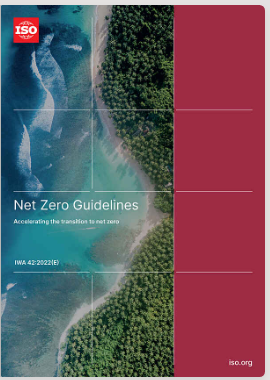
      ISO introduced the Net Zero Guidelines (IWA 42:2022) at COP27 in 2022. The new standards will build upon the current guidelines and are expected to be announced at COP30 in November 2025. However, the ISO will set a public consultation period earlier in the year. (ISO website, June 2024) (Net Zero Now)

      Changes to the guidelines will require continuous verification and emphasize reducing all greenhouse gases rather than relying on carbon offsets.

      For more information, visit:
      (Original net zero guidelines)
      https://www.iso.org/obp/ui/en/#iso:std:iso:iwa:42:ed-1:v1:en

      (Upcoming net zero standards)
      https://www.iso.org/contents/news/2024/06/netzero-standard-underway.html
      https://netzeronow.org/post/new-iso-net-zero-standard-announcement
      https://trellis.net/article/what-you-should-know-about-isos-forthcoming-first-net-zero-standard/

      4. Science Based Targets initiative (SBTi)

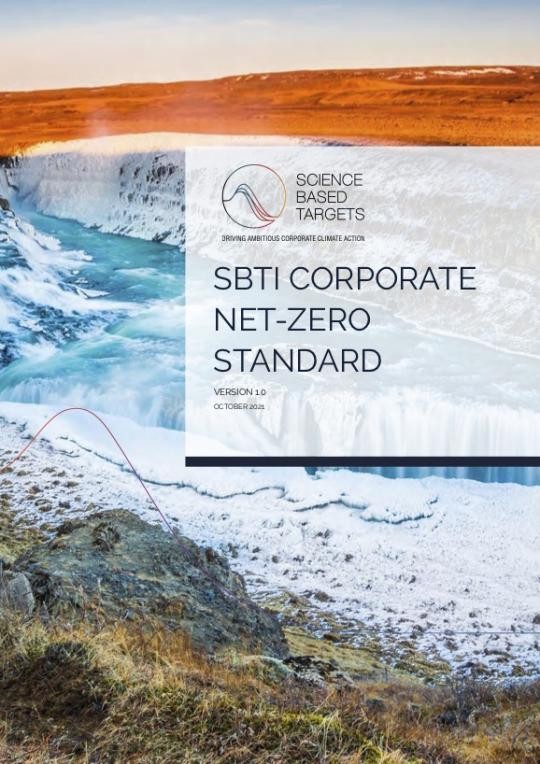
      Corporate Net-Zero Standard

      SBTi is revising its net-zero framework to align with the latest climate science. The revised standard will require companies to halve emissions by 2030 and cut them by 90% before 2050, with minimal reliance on offsets. Recent controversies over proposed offset allowances have delayed the next version. (Heather Clancy, Trellis, January 7, 2025)

      According to the Science Based Target’s website, the revised standard will be up for public consultation twice, with the first round beginning no earlier than March 2025. Companies will also be able to apply to test drive the new standards.

      As of February 2025, the SBTi is asking for additional stakeholder feedback on the revision. (Science Based Targets)

      For more information on the revisions, visit:
      (Science Based Targets Feb 2025 update)
      https://sciencebasedtargets.org/news/corporate-net-zero-standard-revision-sbti-releases-new-opportunities-for-stakeholders-to-input
      https://www.esgtoday.com/sbti-pushes-back-timeline-for-new-corporate-net-zero-standard/

      Implications for Japanese Corporations

      For IR professionals managing ESG disclosures, these updates signal a need for:

      • Stronger alignment with global reporting standards –  Aligning with evolving ESG frameworks will improve consistency and stakeholder credibility.
      • Enhanced carbon and net-zero disclosures – As climate risk reporting becomes more stringent, companies need to integrate these changes in metrics into financial statements.
      • Data accuracy and comparability –Stricter regulation scrutiny means companies must ensure their ESG data is robust, verifiable, and in line with global best practices.

      Must-Do Action Steps for IR Professional

      As an IR professional, you are at the forefront of ensuring that your company remains compliant and transparent in an ever-evolving ESG landscape. With the significant changes coming in 2025, staying ahead of these updates will be essential for maintaining investor trust and meeting regulatory expectations. Take the following steps to help navigate these changes effectively and strengthen your company’s sustainability reporting strategy.

      1. Assess current ESG reporting practices – Conduct an internal review to identify gaps between existing reports and upcoming standards.
      2. Engage with external experts – Collaborate with consultants or translation partners to ensure ESG disclosures meet international expectations.
      3. Leverage technology for reporting consistency – Utilize ESG reporting software and translation memory tools to ensure consistency across disclosures.
      4. Monitor global regulatory trends – Stay informed about updates from ESG frameworks and key regulatory bodies to maintain compliance.
      5. Stay Updated on ESG Frameworks – Regularly check for updates and industry news from the official sources:

      Remember…

      The ESG landscape is constantly evolving, and some of these updates are still subject to further change. Timelines may shift and updates could face delays or even revisions based on industry feedback. Keeping a close watch on regulatory announcements, industry news, and expert discussions will help you avoid last-minute surprises and ensure your company is always a step ahead.